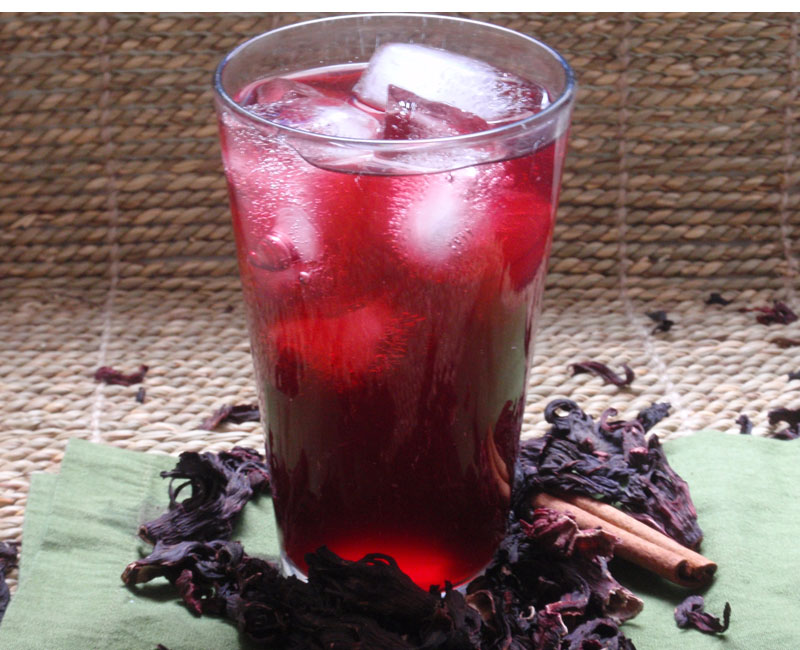
Sorrel

Mother Earth News magazine recently published an article about the blood-pressure lowering properties found in a tropical plant of the hibiscus family. The chemicals in this plant were proven to be more effective than the leading laboratory drugs for blood pressure reduction and it is said to also be useful in lowering cholesterol, aids digestion and is a treatment for scurvy and an immune booster. I also read somewhere that it is used as a remedy for the aftereffects of drunkenness. The plant is used as a diuretic, a mild laxative and for the treatment of colds and cancer. This plant is non other than sorrel, (Hibiscus sabdariffa) used to make the traditional Christmas drink of Trinidad and Tobago. It is the same plant used to make the familiar red zinger tea. Known as roselle and Flor De Jamaica it is a tropical or subtropical plant native to Iran, Africa, Mexico, India and the Caribbean but it can be grown as a warm-weather annual here in the US.


Attractive, delicious, good for your health - all reasons to love and grow sorrel.


While at my parents' house in December, I was awoken one night by a loud cracking noise just outside my bedroom window. I described the noise to my father the next day and the retired Police Sargent in him set out to investigate, armed with a cutlass. The noise turned out to be the sound of an unusually large sorrel bush breaking under the weight of its mature fruit. Together we cut and hauled the bush to the kitchen area and proceeded to harvest the sorrel fruits from all the surrounding plants which were growing among bananas and pigeon pea shrubs. We filled three large bowls of sorrel while chatting about this and the other. Dad pointed out that he and his friends and siblings ate the young sorrel leaves when they were children. I tried some. They were sour but very tasty and a bit like cranberries. The leaves can be used in salads and are favored in curries and stews in many African countries. The fruit of the sorrel plant consists or an acorn shaped seed covered by short, colorless hairs and encased by a deep red calyx supported by a short spiky collar. Peeled away, the calyxes are the most desirable parts of the plant. Also, the stems of sorrel contain strong fibers which are used to create ropes and rugs.


My mom gave me small bag of dried sorrel to bring back to New York. She was sure to include a couple leaves from the bay leaf or spice tree from the backyard. I have found packets of dried sorrel in the Latin/ Mexican sections of many supermarkets and of course it is sold in small groceries in Caribbean neighborhoods. Packaged this way it is available to be enjoyed all-year round. It is easy to prepare this delicious drink. Simply add the dried sorrel to water and boil for five to ten minutes. Almost immediately the water will become a luscious deep red. You may add a few whole cloves and/or a stick of cinnamon to the boiling water. Cool and strain. Add sugar to taste and serve with ice. I'm a bit of a purist and find the taste to be best with nothing added. However, Jamaicans are known for adding ginger to their sorrel which to me creates an entirely different experience. I tried one such concoction at Miss Lily's on Houston Street a few days ago. Not bad at all. Carib Lager Beer bottles a Shandy Carib in three mixtures: beer with ginger, beer with lime and beer with sorrel. Try sorrel with rum for an evening cocktail. Whichever way you like it, drink to your heart's content, live well and enjoy!


Shadow, Sorrel and Pigeon Peas

Since returning from my last visit to Trinidad and Tobago in December, I've been inundating my boys with things Trinidadian or rather, Trinbagonian. I play parang, traditional Christmas music sung in Spanish and performed by groups of skilled serenaders logging cuatros, a base and chac chacs (maracas) going to various houses in the middle of the night or early morning.  I remember my family would be startled out our beds after the stealthy group announced themselves just outside the front door (God only knows how they get past dogs that usually raise a ruckus) by suddenly bursting into song, "Sereno Serano Sereno Sera.. Bilar, Bilar.... Aheeeeeeeeeee!" We scrambled to make ourselves decent and be ready to greet them before the first song ended. What lovely music the men with cuatros made while the bass went dumdumdum, dumdumdum. The women and men sang "Alegria, Alegria...Ahi Ahi Ahi, Brrrrrrrr." Those parang sessions afforded the rare opportunity to see my parents dance together. We learned to click spoons back to back and joined in by clapping. After several songs and rewards of black rum cake, slices of ham, lots of rum, ginger beer and eggnog, the musicians shuffle away singing "Sai Sai Sai".

I found an old CD of vintage calypso with songs by Crocro, Brigo and Rio and embarrassed the boys when explaining that the words cocoloux, pum pum, bamsee and tot tots are all local words for penis, vagina, buttocks and breasts. We talked bout the use of metaphors, satire and political and sexual references in the tunes of various calypsonians like Chalkdust's, "Quacks and Invalids", Shadow's "Stop the Boat", the line "Captain the Ship is Sinking" and "Big Word (pronounced 'wood') Man". Julian was introduced to the music of the Mighty Shadow and looked at me with some concern and amusement as I imitated Shadow's dance and movements on stage. We listened to "Christmas Nice" a gazillion times and I love that line from Bassman, "I was planning to forget calypso and go an plant peas in Tobago.."
http://www.youtube.com/watch?v=n3O-jgw_V3Q

Julian has had it with my constantly speaking with this not so-easy-to-understand Trini accent, dancing like a jab jab (diab diab) and extemporising instead of speaking to him. I would start singing:
"Listen young man, if yuh doh hear what I say yuh see that bloody iPhone, I go take it away..."
to the tune of Nelson's King Liar.
http://www.youtube.com/watch?v=cYkqMT6HKD0

Without realizing it, the seemingly resistant Julian often finds himself singing or humming along and even dancing a bit. I can't wait till he learns to whistle too.

On Sunday I made a breakfast of pumpkin cooked with tiny bits of salted codfish, lots of garlic and pepper and served it with some left over collard greens and my family's version of fried bake, the very thin ones rolled out with a pin and cut into squares. When heated they create air pockets almost like nan and require little oil for cooking. Orion loved them. Julian did care too much. Last night I cooked salted cod with coconut milk and tomatoes and served it with boiled green bananas, cassava (Manihot esculenta), corn dumpling, whole ochro (Abelmochus esculentus) and hard boiled eggs. While Julian did his homework I tortured him with cooking details, explaining how simple it is to make the "cow tongues", the name my family gave to the elongated, boat-shaped dough that were boiled to make dumplings. The only thing missing was a slice of zaboca (Persea americana) on each plate. The meal was accompanied by our very special Xmas drink, sorrel, made from Hibiscus sabdariffa. As is often the case, dinnertime is when we get a chance to talk and last night the talk was focused on the meal itself. The boys fought over the last egg and traded various pieces of food. Orion wanted seconds of course (how a skinny kid could eat so much is beyond me). Julian really liked the sorrel and asked me to repeat the word "sorrel" a few times.

"Not a chicken in de nest, dey know man love chicken breast....."
http://www.youtube.com/watch?v=ppdIySr0CxY


Speyside, Tobago


I am very thankful that Shadow continued producing calypsoes instead of turning to a life of agriculture. My life, those of my boys and countless millions more have been made richer by his sense of humor, his soulful, insightful lyrics and tantalizing rhythms. As I sit here, adjusting to the New York winter cold, I contemplate returning home to the countryside where I can create a paradise with jade vines, passion flowers, petrea, orchids and bromeliads. It will also be a place where chickens graze on grass, where I can plant rows of avocado trees, bananas, sorrel, cassava, ochro, pigeon peas (Cajanus cajun) and tomatoes that taste like the sun, in Toco, Rio Claro or on a breezy hillside in Tobago.

Nuit, GiGi and Other Cats in the Garden

It was 5:51 on a Wednesday evening in October. I wrote while waiting for a coat of bright red paint to dry so I could finally finish the opening side of a new compost bin. I was also waiting for approval of cost for plants to be installed in a new Brooklyn backyard garden. My cat, Nuit, lay very still on the sofa, breathing heavily.


So often I've been surprised when asked about the cats in my email address (veronicats@earthlink.net) or in my garden design web address (veronicatsgardens.com). It happens that my first name ends in CA and my last name is Tyson-Strait. It also happens that I love cats and they have been a major part of my life for many years. The garden near my apartment building is home to several stray cats, most of which find shelter in a space created below the concreted area where the soil was not sufficiently compacted. My boys and I have rescued abandoned newborns and fed pregnant and nursing moms. I am careful when watering so as not to soak a new litter. Some cats are a bit fearless and disregard me as I work and one young cat bravely came under the stream of my watering hose during a hot summer day.

About twenty years ago when I first met my ex-husband, Marc, he belonged to a gray long-haired Persian silver tip mutt named, JayJay. They had both lived in Key West before moving to New York. I very easily fell in love with JayJay and we spent a lot of time chasing each other around Marc's apartment on 72nd Street. He was a lot of fun. I loved how he would raise his ears and resemble an owl when he wanted to be left alone. He liked being held on my shoulder like a baby and when Marc held him, he chewed on his long hair. JayJay accompanied us on our first date together. While holding on to Marc's shoulder he panicked about the traffic noises and by the time we got to Central Park, Marc's shirt was covered in tiny holes and little red blotches. JayJay carefully investigated the park keeping just a few yards away from our picnic blanket. I remember with some horror how JayJay behaved whenever a particular friend of Marc's first visited the apartment. There was lots of hissing as soon as the guy entered the apartment and a refusal to let him move in any direction. After drawing blood again on the second visit, the "monster cat" was locked away whenever this evident enemy came by. I had never seen anything like it and JayJay never behaved like that with any one else.

On the evening before he was to be emasculated, we had taken JayJay to the lower East Side to a friend's apartment to house sit and watch his cat. It was the first time that JayJay had been around another cat and it was a girl cat. He tried to be nice but that cat hated him and immediately retreated to her post on top of a seven-foot wardrobe. We watched with amusement and disappointment as JayJay walked from one end of the apartment to the other, while the perched cat hissed each time he neared the cupboard. After about the 99th time JayJay leaped, swatted the stunned cat in the face, jumped down and ignored her the rest of the night.

We lived in an old apartment building in Williamsburg and Marc was in the habit of smoking in the hallway where JayJay often followed him. One day we were horrified to see JayJay scamper into to apartment followed by a young adult pit bull. The dog held JayJay in his mouth while pressing him against the inside of the door to the apartment. Marc repeatedly hit the dog with a broomstick while JayJay hissed and growled but the dog held on and remained almost motionless while I stood in terror thinking that Marc would be attacked next. JayJay hissed and growled. After what seemed like hours the owner of the dog managed to push his way into the apartment and yank the dog who promptly released the cat. JayJay hid for hours. He later resurfaced but did not appear to be hurt.

Marc surprised me one day when he opened a cardboard box to reveal a jet black kitten with yellow eyes. I reached to touch him and he melted into a corner and hissed at me. Nuit was one of a several kittens in a litter at a nearby deli. He was a wild one and spent much of his time hiding. I made a plaything from a piece of plastic tied up with a thin leather strap and threw it in his direction. Surprisingly, he ran after it and carried it a few feet in his mouth. As the weeks went by he began to jump higher and grabbed the thing out of the air and often brought it close to me. He was a retriever. I loved how he sat on the window sill and growled at sparrows and pigeons with a throaty "ahahahahahah". Although he remained a thin cat all his life he was a foodie. I have an old photo of him as a baby swinging his head from side to side, trying to dislodge a pilfered fried chicken drumstick from his front teeth. I often chased him from the kitchen after finding the crusts of my pies nibbled and teethmarks on the cheese and butter. Nuit also loved my house plants. He nibbled on the Hakonechloa aureola grass and cooking herbs growing in my window boxes and my poor bromeliads, orchids and Christmas cactus suffered due to munched leaves capsized pots.

Both JayJay and Nuit got along well from the beginning and it was very amusing to see them wrestle and chase each other. Once we took them on a trip to Ashfield, Massachusetts to visit our friends, Jeff and Bruno. There were two cats at the house. Beast was a black, long haired cat with fierce-looking orange eyes with black specks. Pinkey, a white short-haired cat who drank from the kitchen sink and liked water on her head. Both cats were hunters and spent most of their days outside, often proudly returning home with live treasures of birds, chipmunks and garden snakes which were released in the house. They hunted even in winter and Bruno would call to them when night approached. Those cats ended their days curled up in comforters with Jeff and Bruno or found their way into the beds of house guests. Upon their first encounter, Pinkey terrorized my already shy Nuit and he vanished. For days we walked around calling out to him. We searched along the country roads and through the field with horses and old barn, through the apple field calling for Nuit but never heard a meow. JayJay dutifully followed Marc wherever he went and sometimes we could only tell where he was by the movement of tall grass. Nuit finally appeared after a few days, just in time for the trip back to New York. He had been hiding under the house behind the firewood all the while.

At the time of our separation, Marc and I decided to keep the cats together, with him. The boys and I moved to a third floor walk-up about twenty blocks away on the border between Williamsburg and Bushwick. A couple months later a little furry thing, no longer than a few inches stepped in as we opened the door on our way out to school. I said "No way" but the boys pleaded and to avoid being late I took the scraggly thing upstairs and placed him in the bathtub and left. We returned home to find a very dirty cat and tub and immediately gave both a bath. The same happened the following day until the weekend allowed some time to attend to the creature. We named him GiGi after a black cat played by Phil Hartman in the Hayao Miyazaki film, Kiki's Delivery Service. The boys love all Miyazaki and Studio Ghibli films and the Cat Returns is one of Orion's favorites. Orion immediately adopted GiGi as His cat and we guessed his birthday to be in July, the same as Orion's.

Perhaps GiGi's earliest days with us is responsible for his water-loving tendencies. He almost ran me over a few times and I worry about squishing his tail in the doorway as he rushes to the bathroom each time he thinks I'm heading there. Like Pinkey, he allows the water to run on his head when drinking from the tap in the sink and he sits and waits in the bathtub until I cave and open the bath faucet a bit. I'm always caught off guard when he shakes the water off his head. The water in his dish is used for cleaning his paws. GiGi is a good companion and spends his nights in my bed and sits nearby when I'm in the kitchen or painting or writing, like at this very moment.


                                                                     Sink-full of GiGi


JayJay was about sixteen when he died suddenly following a stroke five years ago. Marc and I agreed to move Nuit from Williamsburg to be united with GiGi in my apartment in Harlem. Two short-haired black cats, one old and thin, yellow-eyed, sometimes paranoid yet super friendly (constantly surprising and pawing visitors with his demand for incessant ear scratching, which was often rewarded with a quick, painless but always surprising bite). He had a habit of sitting with one front pay extended and someone once called him the Gestapo cat. The other, young, soft, green-eyed, feisty and a bit aloof. Visitors to my apartment often think it is deja vu when another black cat suddenly walks by. They romp around, keeping each other company, coughing up fur balls and vomiting house plants.


                                                                           Nuit and Gigi

Beast was rather old when she did not return home after Bruno's many calls. Pinkey was at the door, trying to get inside when the end came. She was the victim of a vicious attack by a fisher marten, (
Martes pennanti or Martes americana) a fearless creature that may be behind the disappearance of Beast and many other cats in the area. It is said that a fisher would even attack a porcupine by somehow getting under it and ripping open its stomach. Also, a neighbor in the town once found the nest of an owl that cradled a cat collar. My Nuit had been spared but we never took the cats back to Ashfield. There are now three other cats at Jeff's and Bruno's house. Orfew is a feisty long haired black cat like Beast. He is also a hunter and looks lovely perched on a some rock while Jeff is working in the garden. Pepita is a chubby 13-year old tabby often seen rolling around the lawn and there is also a new orange cat that I've never met. This orange cat is a recent addition to the family since the disappearance of Ismael, a sweet and reserved muscular gray tabby. Bruno loved Ismael a lot and it is sad to loose him, not knowing how he died.


                                                   Nuit snuggled up to a sleeping Orion


My Nuit died on the morning of October 11 while lying on the sofa with me talking to him and stroking him behind the ears. He was almost twenty years old. Although he never hung out with the strays in the garden he is finally free to roam there, chase birds and take bites out of hundreds of plants. I planted a Magnolia stellata shrub in the garden to mark his life. At the moment it is leafless and covered in yellowish fuzzy buds. When I touch them I'm reminded of his paws.

Little BITs, Art and Science at PS3


It is the end of an era. June 28 was our last day of school at Public School number 3 on 490 Hudson Street in the heart of Greenwich Village. This school has been part of our lives for over ten years beginning with Orion's first day of class with Isabelle, a delightful (now retired) teacher who wowed us with her kindness and great attitude towards learning. Over the years the boys were privileged to be under the care of many teachers but shared only one, Cynthia W,(Sley) who is also the lead vocalist of the punk-rock band, Bush Tetras and performs regularly with her new band. The year ended with Andrea, a tough but caring teacher who kept her brood very close as she dispensed doses of discipline and imaginative tutoring while fostering independent thinking.


PS3 is a public school well known for its creative agenda and parent participation. For years I’ve escorted classes to numerous museum and science trips, Alvin Ailey performances, donned my cowboy hat and boots for square dances and attended scores of exhibitions and concerts. Several of these events were hosted or organized by parents. It also must be noted that many students are offspring of well known actors, comedians, models, musicians and scientists. I often bumped into Louis C.K. and his red-head daughters squeezing through the auditorium doors, or that actor from Swimming With Sharks. Natalie Portman walks her dog past the school and I once got a smile from Edie Falco as she squatted with a little girl against the blue doors of the front entrance. 

The school has been dubbed The Hippie School for its bare-foot dance teacher and same sex parents parading the hallways and its laid back, almost-too-relaxed approach to learning. I am sometimes distressed at the fact that the use of computers has hindered the kids’ ability to write (will they ever write a love letter, in script?) and spelling does not seem particularly important since there is always spell check. However, the kids are happy and thriving and like my Julian, they are being accepted into some very competitive and sought after middle schools. Julian is always singing something or the other for a musical on the Civil Rights Movement, or from the most recent, The Internal Organ Hall of Fame, a full length musical. Julian was The Stomach, one of three organs nominated for induction into the Hall of Fame. I attended one of many performances of this play in which there was a scene where an incredible boy (PS3's own “Groovy Guy”) with tons of energy and charm appeared on stage in his role of Raging Hormone. Parents were on their feet clapping as he stormed off, flailing. Although it was funny and very entertaining, I found myself growing increasingly emotional throughout the performance. I kept thinking that soon I would no longer see some of those kids and of how they grew so well and so quickly and how I had witnessed my Julian become great friends with one boy he had earlier considered his “arch nemesis” while some other best buds became just friends.

"....Thirty feet of beauty, come and see
Each organ is a cutie, just like me
No wonder we are snooty
We're the best
Thirty feet of beauty
Let's digest...."


I watched as the Heart extolled his virtues, the Appendix bemoaned her insignificance and other organs danced and sang their parts with verve. It was exciting watching the kids growing into teens and poised on the edge of great futures but also sad, because they were so quickly shedding off their childhood. During the previous weeks I was often surprised to find that they were so brave, so talented, so funny and innovative and always protective and supportive of each other. I became increasingly grateful for all the parents who contributed financially or otherwise to make the process of learning a fun and positive experience for my children.

I read somewhere that gratitude is evident in the ability to give to others. After getting the Julian Nile Strait seal-of-approval I approached his teacher who agreed to let me have four sessions in which to introduce botany/ plant science to her brood of 4th and 5th graders. We started with a brief history of botany and the rise of interest in plants in the sixteenth and seventeenth centuries. I remember so well the look on Julian’s face after the first five minutes of class. It said “You are talking too much Mom. Don't bore us and embarrass me in front of my friends.” His expression changed as soon as I said "Now let’s look at some plants". The kids were encouraged to smell, touch and even taste. A little green spider helped to increase the excitement among the boys. In following classes we talked about the parts of the plants and their functions. Then there was a bit on how plants are classified and the simplicity behind the seemingly complicated business of botanical nomenclature or bi-nomial (two name) system. There is a lot to be guessed about that TV show Are You Smarter Than a 5th Grader..... These kids are smart and curious and often when I thought their eyes were beginning to glaze over I found that they were absorbing the information and could later clearly repeat what I had said earlier. Their interest become obvious when parents started writing and stopping me in the hallway to say how excited their kids were about the class. In the midst of the first lesson one boy said “We are little bits.” “What?” I asked. "Botanists In Training “ he replied, and indeed they were. How quickly they understood that folia and phyllum referred to leaves, flora and flori to flowers and carpa to fruit. They got that bi, tri, odor, micro, acutus and palmate meant two, three, fragrant, sharp, palm-shaped, tiny and large and realized that if they listened to their brains a little they could sort out the meaning of descriptive names or the specific epithet of many plant names. The cor in cordate or cordata referred to the heart as in coronary and dent in dentata referred to teeth as in a toothed leaf. They understood that Hydrangea macrophylla had big leaves and that Quercus rubra was the scientific name for red oak. They picked up this stuff with ease. They also figured out that names including words such as cheninsis, peruvians, canadensis, virginiana, mexicana and so forth told stories about the origins of the plants and that names like Lewisia or Clarkia informed us about who may have discovered the plant or about who it was named after. Later the kids each selected two cuttings from flowering plants and common New York City street trees to be pressed. The trees included Ginkgo biloba, Liquidambar (sweetgum), Gleditsia triacanthos (honey locust), Quercus rubrum and Quercus palustris (red oak and pin oak), Platanus acerfolia (London planetree), Acer platanoides (Norway maple) and Tilia cordata (Little leaf linden).


We went on a trip to the New York Botanical Gardens and looked at botanical illustrations, made drawings of plants and went on a guided poetry walk featuring the poems of Federico Garcia Lorca. All the while our plant specimens were drying out in plant presses and under the large rug on which the class spent part of their day listening and voicing their options on various current events. Our final class together involved the mounting of the dried specimens which were immediately transformed into works of art by the sheer act of being placed against a white background, creating very graphic representation and documentation of natural history. I helped with the labeling. The kids were very proud of their scientific artwork and they had every right to be. They were beautiful.


A few days later I saw on the news that iPhone had just released
a new app aimed at helping users identify city trees. The app includes the option to photograph a leaf, type in the location of the tree and the correct ID is spat out. How cool is that! I hope I have done a little
bit to inspire a few kids to become naturalists, more observant of their natural surroundings or even to consider careers in the field of botany, horticulture or environmental science. I hope they continue to impress their parents by noting the difference between a London planetree and the sycamore or be curious about the purpose of the hairs or waxy surface of some leaves. If they are curious about the meaning of triacanthos as in Glestidia triacanthos or notice the abundance of detail and beauty that lie in each leaf or tree bark then I’ve done a bit to improve their lives and our future.

In just a few weeks the Little BITs of PS3 will start new lives as they enter various middle schools throughout New York City. Many thanks to the teachers, parents, student teachers, office and support staff for their roles in creating amazing human beings (with intestinal fortitude) and for making the world a better place.

Adventures With Fruit


While riding the New York City subway I either do the daily sudoku puzzle or I read the New Yorker or one of many books or magazines about botany, gardening or garden/landscape design. Sometimes I just grab whatever reading material is nearby as I rush out of the house. For a few weeks I read a book titled Fruits Trees of the Caribbean. It covers the Caribbean in general but fails to include many of the fruits I grew up eating and cherished while growing up in rural Trinidad. I decided to seek out some of these missing fruits on my next trip home. I wondered how many of my nieces and nephews ever ate a tonka bean fruit or topi tambo or peewah or balata. My Plan was to photograph these fruits and write about them along with some other not-so-familiar fruits and educate myself and others in the process.

 
                                                                      balata (Manilkara bidentata)


My trip began at the end of December 2010. After a night out on the town, my sister and I returned to our room at the Hyatt in Port-of-Spain at about 4:30 on the morning of New Year's day. We were exhausted and happy. Dancing is so much fun. There on the table sat one of two magazines highlighting the history and culture of T&T. To my delight and chagrin there was a short article about fruits of Trinidad and Tobago with a note that the author had just completed a chart listing all ninety-four (94) fruits found on the twin-island republic. Alas, he had not just beaten me to it but had gone far beyond the scope of my plan. I made a note to seek him out.

A couple weeks later, after emails and phone conversations, we met at the foot of Lady Chancellor Road leading to the Horticultural Society of Trinidad and Tobago. His name is Nasser Khan and he is a feature writer for the Trinidad Guardian and other local newspapers. Mr Khan has written many articles on cricket and the history of Trinidad and Tobago. Check his work out at http://www.bestoftrinidad.com/profiles/nasserkhan.html. As a result of the work on the fruit chart Mr Khan has been commissioned to create similar charts for each of the Caribbean islands. He is also working on the publication of a text book to be used as a guideline for students studying local agriculture. All this is done outside of his role as a businessman in the commercial industry of Trinidad and Tobago Carnival. He is a very knowledgeable, energetic and passionate man and I thoroughly enjoyed the little time we spent talking while driving around Port-of- Spain. In addition to admitting to the fact that I am ignorant about many of the fruits on the chart, speaking with Mr Khan made me aware of how little I know about current events in T&T. I am inspired to keep more informed (as if the constant political drama of America is not enough to keep me occupied and depressed).

Unlike many Caribbean islands, Trinidad shares the flora and fauna of much of South America. Many trees which are endemic to Trinidad are also native to Brazil, Guyana and Suriname. We also share many of the poisonous snakes and primates. Think of all of South America packed into one small island, separated from the continent by a few miles of ocean. Fruit names like cocorite, gru-gru and gang gang, and of course, peewah always remind me that I am the daughter of the soil shared by natives or Ameriandians who populated the island at the time of Christopher Columbus' “discovery”. I imagine that these fruits, especially peewah, were the source of starchy powder to make breads and other nutritous foods for Caribs and Arawaks. I crave these fruits and identify with them as much as I feel the need to move my body when I hear drummers beating out their rhythms on the subway platforms.

Cocorite (Attalea maripa)
Sweet and yellowish brown when ripe, cocorite's lure is in the thin layer of sweet flesh which surrounds a dense pit, wrapped in a papery skin. The pit which is about 1.5 inches long is smooth and brown and shaped like a zeppelin with two eyes on the rounded end. As children we would rub the eyes on concrete until the area around them became thin enough to pierce the eyes with a pin or small nail. We would then pry out tiny pieces of the coconut-like flesh inside until the seed was a hollow vessel into which we could blow and voila, we had a whistle. Cocorite is eaten whole and dispersed by forest animals. My father grew up near the Pitch Lake in La Brea and still today talks of his adventures through the cocorite fields on his way to and from school.


                                                                            peewah


Peewah (Bactris gasipaes)
Some of my favorite childhood memories are of waiting for the freshly boiled peewah (chataigne or topi tambo) to become cool enough to be handled and eaten. Cooked in salted water, peewah is a starchy treat with a thin shell housing a little coconut in the middle. A seedless version called kerekel may be the result of an undeveloped or unfertilized ovules. Kerekel is often acorn shaped and has a milder flavor than the darker-fleshed and skinned peewah.

Tonka Bean (Dipteryx odorata)
The fruit in best known for the treasured seed which is often compared to vanilla bean with hints of caramel, vanilla and almond. It contains a chemical called coumarin which is harmful if ingested at high levels. Tonka Bean is used to flavor sweets, ice-cream and it is a common ingredient in perfumes. It is rumored that tonka bean extract is the secret ingredient in the much coveted recipe of the legendary Angostura Bitters, produced solely in Trinidad.

Most people do not realize that the seed is just one intriguing part of this delicious fruit. The papery skin covers a half inch thick layer of marzipan-like sweetness held together by short fine hairs attached to the large seed. As children, we used our bottom teeth to scrape off the pasty flesh and ended up with teeth-full of fine fibers. It was always worth it. The washed and fluffed hairy seed was an excellent throw thing and with some grooming and eyes it made an excellent and very quiet pet.

Balata (Manilkara bidentata)
I vaguely remember some story about balata trees being the home of poisonous snakes. That never interfered with my love for this hard-to find fruit. It is a small fruit of about an inch in diameter with a rather large seed surrounded by a very sweet, grainy pulp containing a gummy milk. The milk makes it unpleasant to eat sometimes but that problem can easily be solved by using a spoon to scoop out the delicious, sapodilla-like flesh. It was difficult to keep my objective in sight. I was so excited about finding some balata that I ate almost all before remembering to photograph them. Balata trees are known as rubber trees and my father described how his mother and other workers cut “V” slits on the trunks to collect the sap in rubber fields common many years ago. The sap is used to make latex and other rubber products.

Like the wood of poui (Tabebuia), a tree well known in Trinidad for its beautiful habit and colorful blossoms, balata wood is extremely dense and has much commercial value for its strength and durability. Deforestation continues to rob us of natural habitats for diverse creatures and makes some once-common fruit trees almost rare. I could only hope that as these very significant trees are harvested for furniture and construction or cleared for housing and roads that seedlings are planted to avoid decimation of the population. The cocorite fields through which my father and his siblings walked to and from school have almost all been cleared by expanding oil companies. Peewah is rarely seen on the market. I would like my sons and later generations to experience the joys of tasting and knowing these unique fruits and realize that they are part of the natural history of the islands, most carried over from the continent and all harvested by myriads of ethnic groups for centuries. These fruits are a record of our illustrious past. Today balata trees are almost always found deep in the forest, possibly and justly so, guarded by massive pythons.

Spring in Central Park


A few photos.

Spring and Love


It is spring! After a long winter we welcome the beginning of this new period that is ripe with promise and optimism for a better year ahead. The red buds are showing off their stuff, magnolias are bursting open, narcissus are reaching up saying “Look at me, me” and love is in the air. What better place is there for a outing than at the New York Botanical Gardens. You are privy to the world's largest collection of plants in North America and if and you are fortunate to live in New York City, this magnificent 250 acre garden is your very own special backyard. Fill your backpack with some fruit, water, cornichons, cheese, pate, bread or crackers and wine. Wear your walking shoes. Grab the one or ones you love and a camera and head out. Take Metro-North to the Botanical Garden Stop or the D or number 4 trains to Bedford Park stop and a short walk to the Mosholu entrance on Kazimiroff Boulevard. Get a map as you enter and begin exploring.

Start with the Daffodil walk and see how many types of narcissus there are. These carpets of cheerful blossoms are a most welcoming sight. Some have double petals, ruffled skirts, stiff petticoats and tinged centers. A few are fragrant while others have erect cups or elegant wing like petals. Do not bypass the rock garden with its display of miniature narcissus, crocuses, rock irises, every imaginable species of tulip and much more. You can’t miss Scilla siberica which is my all time favorite spring-flowering bulb, quite possibly because it offers a perfect true blue (cobalt to azure) flower which is uncommon in the garden.

Nearby is the Mertz Library which hosts the largest collection of botanical and horticultural information to be found anywhere in the world. Delve into the history of botany, the impact of plants on the scientific revolution and see similarities between the collapse of Wall Street and the upheaval of the 17th century European economy, all to be blamed on that deceitful, bewitching beauty named Tulipa. Inform yourself about Darwin’s theories on natural selection and plant observations. Please don’t drool over the gorgeous display of colorful botanical illustrations some of which are centuries old. Read about the history of botanical Latin and plant nomenclature so you can later torture your sweetheart by using the descriptive parts of plant names in everyday banter, “looking rather pubescent this morning darling” or “toenails acutus....”

The Enid Haupt Conservatory is the largest greenhouse in North America and displays the breathtaking tropical rain forests collection that always makes me giddy with pleasure and also thoroughly homesick. Observe how the temperature changes as you meander from room to room and feel the mist on your skin as you encounter a multitude of towering ferns, mosses and plants that seem otherworldly yet like they have been growing there, undisturbed for centuries. Linger in the Aquatic Plants room to be mesmerized by the giant jade vine, Strongylodon macrobotrys. I first saw this phenomenal plant growing on a hillside in Kingston and then years later in Maui. It took my breath away. Oh My God! Yes! Who else but God could have conceived of such a confluence of unreal blues, purples and mint greens into this hanging mass of claw-like, cascading wonder. There is nothing like it, at least not on this planet. A few feet away you will find the reddest of red passion flower, Passiflora vitifolia var. bractiosa and the very exotic and showy blossoms of Thunbergia mysorensis .

Step outside to be in the presence of majestic lotus flowers, water lilies, papyrus and other water-loving plants sheltering bright orange koi before heading back inside to proceed along the walk to the cool, misty rooms of the rain forest flora and through the tunnel to the cactus and succulent collection. There you will find an explosion of textures and plant forms some of which look so unlike living matter. It is amazing to see how plants adapt to growing conditions, some even in the harshest terrains, and realize that like humans they are determined to survive.

Even when the annual orchid exhibit is over you will find a wide assortment of this very sensual flower tucked among or protruding from the greener plants. These exotic plants will have you oohing and aahing repeatedly. The origin of the word orchid is “orkhis“ which means “testicle”. Georgia O'Keefe brought to our attention other body parts in her beautiful flower portraits and it is easy to see through her eyes when you observe these amazing specimens. The Aztecs and Greeks believed that orchids increased fertility and virility. Some have an intoxicating fragrance, (vanilla beans come from orchids) and others have been used in love potions. Nothing says "I dig you" like a gift of orchids.

The Mertz Library hosts the largest collection of botanical and horticultural information to be found anywhere in the world. Delve into the history of botany, the impact of plants on the scientific revolution and see similarities between the collapse of Wall street and the upheaval of the 17 the century European economy all to be blamed on that deceitful, bewitching beauty named Tulipa. Inform yourself about Darwin’s theories on natural selection and plant observations. Please don’t drool over the gorgeous display of colorful botanical illustrations some of which are centuries old. Read about the history of botanical Latin and plant nomenclature so you can later torture your honey by using the descriptive parts of plant names in everyday banter “looking rather pubescent this morning darling” or “toenails acutus....”

Take a stroll to the stunning magnolia gardens where you can loose yourself among the multitude of blossoms. Continue walking south to the Peggy Rockefeller Rose Gardens. This garden is just a tease in early spring but make a note to check back in a few weeks to savor the allure and sheer beauty as you are surrounded by the fragrance and magic of the most perfect flower, all arranged in this strikingly designed garden with a formal radial axis. Very romantic. Delight in the very phallic bronze sculptures of Amorphallus titanum by Tom Otterness at the Nolan Greenhouses. Then wander over to the Benenson Ornamental Conifers. Who knew there were so many types of conifers, some so compact, perfectly shaped and as cute as a button. These lovelies provide greenery throughout winter and the range of hues and shapes make them desirable for the sunny garden, container or window box. You can take the tram all over the 250 acres but if you and your date are walkers, stroll and enjoy. There are so many nooks and crannies and lovely sites that you will not be able to resist stealing kisses frequently. Hands off - the plants please.

Your date may end at the very classy and tastefully stocked Botanical Garden Shop with its inventory or high quality botanically inspired wares for the home and garden, jewelry and a host of gift -giving products ranging from plants to toys. There you will find books on architecture, landscaping, botanical arts and or course all manner of books and horticulture. As a gardener I’ve found the plant selection to be more varied and interesting than at the farmers market on Union Square. You may be introduced to some new beauty like the striking eriginum, Papaver orientals or various shades and Brunnera macrophylla.

For a romantic dinner take a short walk through the main entrance, through Lehman College and head to Arthur Avenue, a very authentic Italian-American community packed with delis, restaurants, seafood and butcher shops and fresh food markets. It is a place uncrowded by tourist and feels more like Italy than Little Italy in Manhattan ever does.

It is all too easy to forget to take care of yourself especially when much of your energy is focused on taking care of others. Solitary walks through the garden can be a very rejuvenating and introspective experience, especially in spring. There is so much beauty and bounty in this ever-changing rolling landscape that some of it seems to permeate the senses and nourish the soul. Such walks, along Daffodil Hill, past splendidly flowering weeping cherries and crab apples, towards the river and waterfall and across the bridges near the Goldman Stone Mill never fail to revitalize my spirit and inspire hope and resolutions for the rest of the year. There is a shady nook between the Seasonal Walk and the Display Gardens. I sometimes sit there and observe the various birds happily splashing around in the little brook and imagine the garden is the most perfect home for them and other creatures, like myself. The garden is synonymous with comfort and peace and inspires me to love and do good things for myself so I can better love and care for others.

If you are not yet a member of The New York Botanical Garden, become one now since you will want to make regular visits. The garden changes constantly throughout the year so always check to see what‘s new. Your dates there are promised to never be boring. Don’t miss the display of peonies along Perennial Garden Way and the gorgeous displays at the Luce Herb and Irwin Perennial Gardens. All kinds of novel plant combinations will thrill you as you walk along the matrimonial, uhm, I mean the Seasonal Walk. There a perfect outdoor room just ahead. No wonder the garden is a favorite spot for bridal showers and weddings. Exit on the right and head to the display gardens and once again delight your senses with the assortment of color, fragrance and texture. Make a gift of membership to the New York Botanical Gardens to a loved-one. It is guaranteed to be the beginning of a rewarding and lovely long-term relationship, with the garden.

Yoga Garden


A friend recently asked me if I had ever considered combining gardening and yoga. I looked at him as if he had three heads before thinking about his question for a moment. Did he mean designing gardens specifically for yoga practice, or incorporating yoga moves into my garden routines or designing gardens that inspire meditation? He later sent me a link to a site that focused on yoga practice to strengthen the muscles commonly worked out during garden chores and instructions to relax and sooth muscles aches associated with gardening injures. Gardening can be a series of repetitive tasks including lifting, stretching, digging, raking, lots of bending and using hand tools. As an urban gardener my job often involves installation in high, windy places and there are circumstances which often require sudden movements. Any combination of the above can cause injury and/or aches and pain. Unfortunately I do not have the luxury to move at a relaxed pace on many of my projects. In one day I can visit up to four gardens to do installations or maintenance and there is little time to focus on deliberate, careful movement. 


However, one particular garden always brings yoga to mind. It is a garden in the West Village which was designed for a classical music composer-conductor by my Mac Carbonel of Verdant Gardens Design. The garden is a simple layout in two levels. The upper level is made of long beds of tall bamboo on three sides of a rectangular gravel-laid area. At the end furthest from the house stands a mature London plane tree (Platanus x acerfolia). Near the tree are a couple Eames knock-off chairs. More seating and containers with a Japanese maple and seasonal planting are installed nearer the front of the rectangle. Two huge mirrors were installed along the back wall of the garden behind the London plane tree thereby creating the illusion of a deeper space. It is a shady garden until he leaves of the plane tree begin to fall. The tall bamboo create a dark canopy which contrasts nicely with the gravel.

The lower area is concreted and bordered by raised beds of moss and ferns. Emerging among the clumps of moss are strapped vines of Boston ivy and climbing hydrangeas which cover the walls on east and west sides. A rectangular cast iron dining table with a glass top sits on the west side and on the right side are containers with seasonal plantings. The steps connecting the two levels sit on the east side and on the landing (which is a small middle level) stand two large containers housing a Japanese maple and a dogwood.

It is a simple and very organized space with a serene and almost zen-like atmosphere. Birds love it and they call to each other in the surrounding yards all day long. I do seasonal container planing but the bulk of my work in this garden is almost janitorial. I remove leaves from the gravel, the mulch-covered bamboo and moss beds and the concrete. I prune and cut back where necessary but much of my time is spent on my knees stretching to collect fallen leaves between the tall bamboo canes, raking and picking leaves from the gravel. It is very repetitive and often tedious work. At the beginning of summer I began to think of this garden as my thinking garden. It was the place where I found that my mind wandered off in all directions and each chore became so automatic that I sometimes had to force myself to think about where I was and what I was doing. My introduction to the garden coincided with a break-up that was particularly horrendous, on the heels of a long tumultuous relationship. The transition into my new life was emotionally difficult. During those moments on my knees, picking fallen bamboo leaves and later plane tree leaves, my thoughts would provide both solace and torture, sometimes for hours on end.

At another garden just a few blocks away, I met Harry who is a retired documentary film producer. I talked with Harry about my never-ending revolving thoughts and he said "You are and artist, make art out of everything you do while gardening. Bring your mind back to every action and make it art". I likened Harry's words to those of past yoga instructors who say when your mind wanders off bring it back to the body and breath, focus on the breathing.

Is there a better environment more suited to the practice of yoga than a beautiful outdoor space with birds singing?

My new goal while gardening is to exercise a balance of breathing, stretching and seeing with more deliberation, focus and intent. Each time I reach between the bamboo canes I remember to switch sides so I 'm not always supporting my upper body on just one arm and shoulder. While kneeling on my garden mat I take turns extending each leg alternately with the reach of the opposite arm, lengthening my spine while stretching the surrounding muscles on either sides of my tail bones and lower back. When both knees are together I practice versions of cat/cow poses with slow, deep breathing. My breaths may never coincide with the pace of my hand movements (after all, I am being paid to work and I move at a fast to moderate pace) but I become more aware of my breath and focus my thoughts to control it as I harvest leaves and rake the gravel.

I am also learning to live in the moment, becoming more aware of seeing what I am looking at. A small pile of leaves can become an abstraction of mid-veins, curled edges and shadows. The stems of the Boston ivy and climbing hydrangeas turn yellow and fall in crisscrossing patterns all over the dark, speckled mulch. The yellowing leaves of the ornamental cabbages have dramatic lavender and burgundy vein coloring that would look great on a silk scarf. I observe each curled maple leaf as I pick it off the the spongy chartreuse clumps of moss and I can cite the differences between the leaves of Platanus acerfolia and Acer saccharum. I am also learning to distinguish between the various bird calls. Chickadees and robins are the ones I hear most often.

There is little opportunity for downward dog, warrior pose, tree pose or many of the asanas one would usually associate with a yoga practice. While I may never relax in savasana or clasp my hands giving thanks to the universe for the time and will to do movements that are good for my body, I always leave the garden with a great sense of accomplishment. The concreted area is always spotless, the gravel is an unbroken sea of gray and the lines created by the tables and chairs are all parallel or perpendicular. Lately when I leave the garden I am mindful and grateful for the opportunity to combine my work with the time I've been given to heal, strengthen by body, nourish my spirit and grow. Namaste.

Happy Fall


Alas, summer is over although today was extremely hot. I do welcome the cooler weather since I spend most of my time outdoors. Attached are images of my work at the Washington Garden on West 148 Street this summer. Enjoy!

AFRICAN RICE IN NEW YORK

  While standing in the long line outside The Hungarian Pastry Shop near Columbia University, I was approached by a man who asked if I could...