Summerflies


Summer is rushing on,  always too fast and never waiting for me to catch up on all my gardening and outdoor plans. No long weekend trips to gardens in Montreal and Chicago.  Just work, teenage-boy wrangling, some live music and visits to parks and gardens around the city.

I've seen tons of bees, a couple hummingbirds and a few butterflies in Central Park and at the New York Botanical Gardens. Cabbage White butterflies are plentiful and some sleep in the variegated dogwood in the West 148 Street garden, cleverly hidden until I disturb them during watering sessions. There were a few Swallowtails, Red Admirals and a Gray Hairstreak in that garden also.


                                                      Eastern Black Swallowtail on ironweed


                                                         At the Native Plant Garden, NYBG


                                                                Tiger Swallowtail at NYBG


                This tattered Question Mark butterfly spent a lot of time in the Habitat Garden at PS188. 


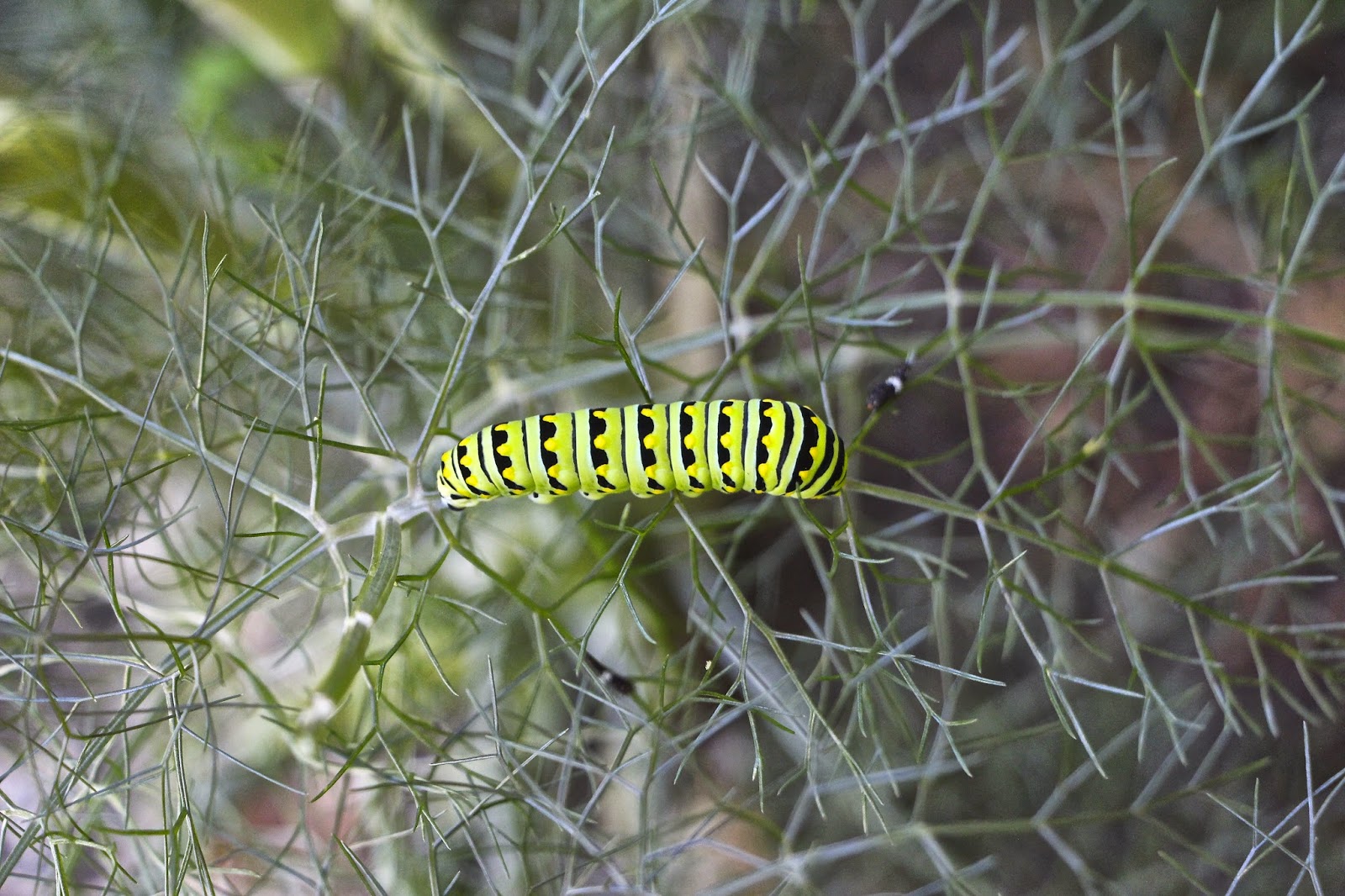
                                    Black Swallowtail caterpillars in the Habitat Garden at PS188


I always keep my eyes peeled for Monarch butterflies and although I notice milkweeds growing in vacant lots and roadside weedy patches, I've seen no evidence of monarch caterpillars. I often stop to ask other gardeners if they've sighted any and got only one positive reply. Have you? Please let me
know if you've see any, how many and where.


                                                               Monarchs are truly beautiful.


I finally spied a couple Monarch butterflies in the Experimental Gardens at NYBG a few days ago. Then the couple became a threesome. They flew together high in the sky, playing or battling in circles then heading off in different directions, landing on buddleia and then finding each other again. Monarchs are large butterflies and I was surprised how swiftly and skillfully they flew. These three did not bounce around in the jovial manner of Cabbage Whites. They darted, glided and changed direction very quickly, almost like dragonflies.  It is no wonder that they make it from Canada to Mexico and back each year.


I looked at these three Monarchs with awe for a long time, happy that they were around and hoping to see many more before summer ends.

Reasons to Love NYBG: Native Plant Garden


                                                                 Bee Balm and Milkweed


                                                     Veronicastrum virginicum 'Fascination'


                                        Purple Prairie Clover, Rudbeckia and  Poppymallow


                                                                           Fire Pink


                                                                         Blazingstar


                                                                       Red Milkweed


                                                                  Asclepias tuberosa


  Narrowleaf Mountainmint


                                                                    Rattlesnake Master

By Any Other Name: Rosa

Peggy Rockefeller Rose Garden, NYBG


                                                              Flower Carpet 'Scarlet'


Lemon Fizz


                                              Coral-peach blossoms turn soft pink with age


Red  Cosair


Savannah     


Cinco de Mayo


Felicitas


                                                                     Pearlie Mae


Northern Accents  'Lena'


Julia Child


PLANT PROFILE: Dogbane


I have been eying this handsome plant growing in a vacant lot on the corner of West 146 Street and Frederick Douglas Blvd. It looks a bit like milkweed and I have milkweeds and butterflies on my brain a lot lately. The plant has clusters of tiny greenish white flowers and narrow, smooth-edged elliptical leaves, growing on opposite sides. Like milkweed, it oozes milky sap when broken. However, unlike common milkweed, it branches and the stems are deep red.

It is a North American native perennial called Apocynum cannabinum. Common names are Indian Hemp, Dogbane or Hemp dogbane and though it is related to the common milkweed, it is not a milkweed. Bummer! Monarch butterflies feed exclusively on milkweeds and while some butterflies may sip the nectar of dogbane flowers, the monarch larvae do not flourish on dogbane leaves.


Dogbane is tough as it grows despite the annual weed-killing fabric and coarse gravel that is laid in the lot. A few other plant species like mugwort and wild chicory manage to pop up but dogbane dominates the space. I pulled then dug some up and found that they grow like common milkweed with horizontal rhizomes.


Plants in a shadier area are much greener. They benefit from less moisture-loss but alas, they do not flower. Still very attractive.


Native American tribes made thread and rope from the tough fibers along the stems of Apocynum cannabinum, hence the common name, Indian hemp. The name 'Dogbane' may have stemmed from the highly toxic glycoside substance present in all parts of the plant. Small amounts have reputedly killed horses when accidentally included in dried hay. It has also killed and sickened sheep and dogs (which dog is silly enough to not detect poison in a plant). Dogbane may also have gotten the name from its use in treatment of mad-dog disease. Also, the milky substance that leaks from any broken part of the plant may be a reminder of foam, as in the foaming mouth of a mad dog. It was also used to induce vomiting, bringing to mind phrases such as 'as sick as a dog'. It is possible that the plant literally was the bane of dogs. Toxins in dogbane are currently used in drugs for cardiac treatments.

AFRICAN RICE IN NEW YORK

  While standing in the long line outside The Hungarian Pastry Shop near Columbia University, I was approached by a man who asked if I could...