WISDOM FROM BETH CHATTO


As gardeners we are constantly looking at the forecast and sucking our teeth at the varying percentages indicating the probability of rain. We know better than to trust weather charts and water our gardens anyway. I am sometimes told by passersby that I don’t have to water because it is going to rain, or they point out that it is already raining. Yeah. Right. I ignore the advise as I know that even if it did rain, the rainfall would often scarcely penetrate the top centimeter of soil and my plants will remain thirsty. Last summer we experienced severe drought and the gardens at Randall’s Island Park Alliance struggled. Irrigation systems are in place on the lawns and the numerous sports fields, but our gardens, meadows, woodland and green street landscapes have to be watered by hand. This year, with a winter that felt more like Spring and a Spring that felt like Summer at times, many plants are stressed. It is now early Summer and the horticulture staff is out watering some area or the other, almost daily. Rainfall is a bonus. Never count on it. Whether we like it or not, our planet is getting hotter and water is becoming scarce in many places. Gardeners everywhere, may be forced to rethink the way we garden. 


This chalkboard stands at the entrance to the Beth Chatto gardens. I think it is a good idea to make similar recordings of rainfall and also note average monthly temperatures for gardens in New York. 


Beth Chatto was a garden designer and plantswoman who understood this when she designed her Gravel Gardens on the extremely arid landscape of Colchester in southeast England. The gardens were inspired by a 1989 trip with fellow gardener and friend Christopher Lloyd to New Zealand, where both gardeners recognized many of the plants they found growing wild and untended on rocky slopes. Another source of inspiration came from the garden at the home of the producer Derek Jarman, in Dungeness, Kent, which lies on the southeast coast of England. Situated on sun-scorched, hostile terrain, Derek had managed to create a unique whimsical and drought tolerant garden adorned with rusted and found objects, many of which were washed up from the sea. Beth was intrigued to find poppies, foxgloves, santolina and other silver-leafed plants thriving in gravel, just a few feet from the ocean. The effect was awe-inspiring. Thrilled by what she saw, Beth set out to experiment with plants suited to the conditions of the environment in which they stood, emphasizing the mantra of “match the right plant to the right place”. The experiment evolved into some of the most beautiful and inviting gardens I have ever experienced.


Antennaria, geranium, campion, euphorbia with vertical verbascum, nepta, Gladiolus, and allium in the background.


Species tulips dwelling among antennaria, rose campion and gladious.


This deep pink-mauve Gladiolus byzantine was a stand-out in this and the gardens of Christopher Lloyd at Great Dixter and at Sissinghurst. Here it grows with red valerian (Centranthus ruber), a common roadside plant all over England in June.


Centranthus ruber stands out against a golden euonymus and euphorbia.


Plants with silvery-green, woolly or fuzzy surfaces, like antennaria, stachys, mullein and lychnis are drought tolerant. These plants trap moisture with their fine hairs and their color reflects sunlight. 


Sedums and portulacas hold moisture in their fleshy leaves. Crocosmia, gladiolus, geranium, papaver, salvias, euphorbias and Verbena bonariensis, all native to drier, hotter climates, are great choices for the sunny gravel garden.


Papaver orientalis  'Juliane' is lovely on its own but stunning against euphorbia and a deep blue catmint, Nepeta 'Hill Grounds'.
 

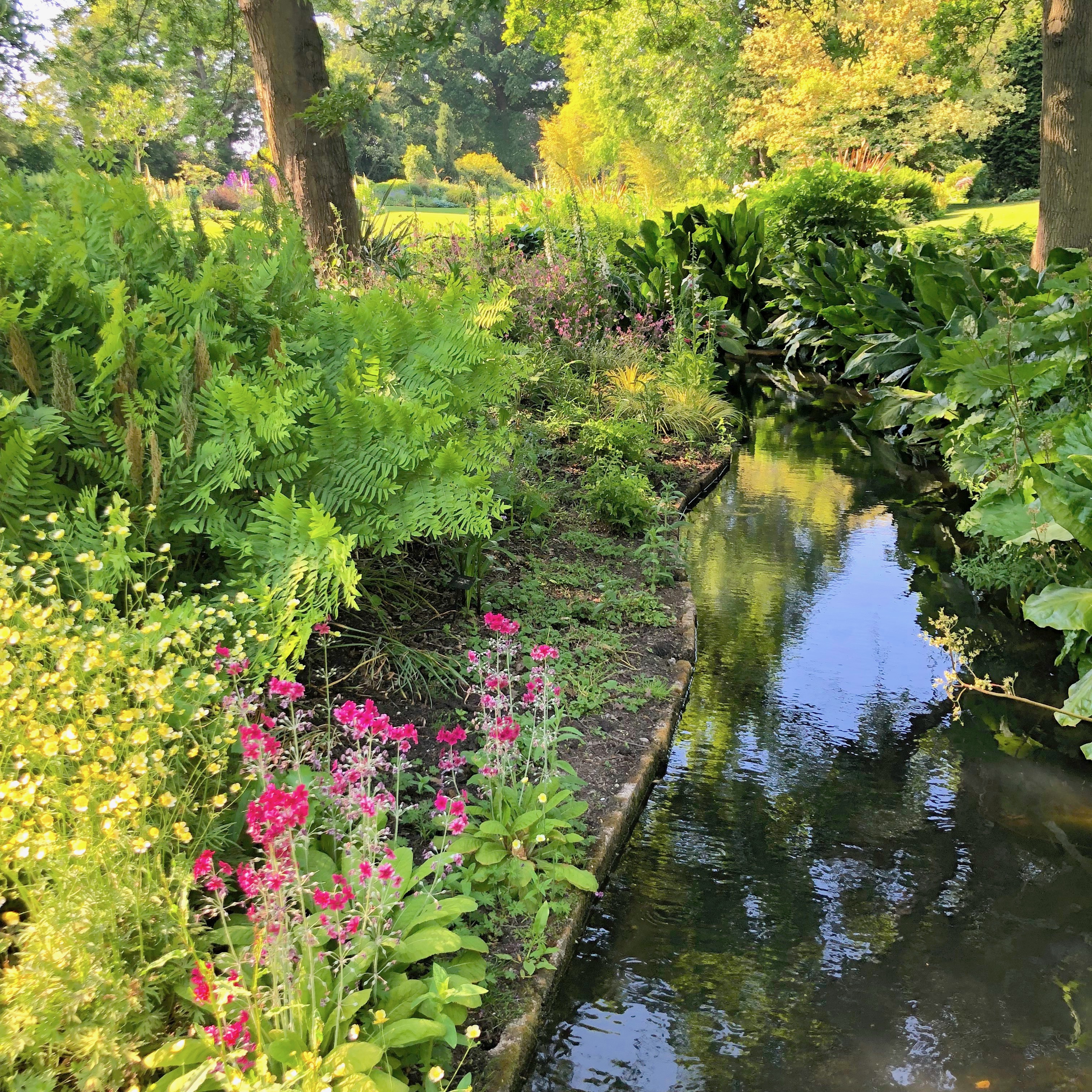
Although Beth Chatto is best known for her beautiful Gravel Gardens, there were other stunning garden typologies to explore nearby. As we wandered along the meandering paths we encountered much loveliness in the form of water gardens, shade gardens and woodland landscapes on the grounds around the house Beth shared with her husband Andrew.


A boggy area of the property highlights moisture-loving plants; shady areas showcased plants placed where they belong, of course.


Lush and inviting gardens around every bend. 


The gardens were filled with bird talk and activity. It took some research to discover that the weird bird I spied was indeed wagging its tail. It was a wagtail (Motacilla alba), and it wagged away while picking at grubs in the grass near the water gardens. Dragonflies zipped past us and butterflies flirted with flowers. 


Circling back, we walked again through the gravel gardens. I was amazed to think that these lush and colorful plantings were only watered once, when they were first installed in 1992. As the announcement was made that the gardens were closing for the day I found it was difficult to say goodbye to this magical place. Thank you, Beth Chatto. Lessons noted.

My Life in Gardens: IN THE GARDEN WITH MOM

My Life in Gardens: IN THE GARDEN WITH MOM: I go home to my politics-spewing, cricket-watching, gospel-tune-whistling family in Trinidad. A few years ago, in September, I crossed the m...

IN THE GARDEN WITH MOM


I go home to my politics-spewing, cricket-watching, gospel-tune-whistling family in Trinidad. A few years ago, in September, I crossed the mark and I have now lived in New York for more than half of my life.  As much I am a New Yorker, Trinidad and Tobago is home too. Trips to the islands rarely take me to the beach. Instead I fall into doing whatever my folks or siblings are doing at the moment. On one of my last visits, it was helping my folks prepare for Christmas. My mom and I spent the days baking her delicious Christmas black cakes and sponge cakes, cleaning, cooking, hanging up curtains and working in the garden. 

Mom always had a flower garden at the front of the house and Daddy put much time and energy into fencing it off from the dogs. Mom seemed very content with his efforts. It was in that garden, with instructions from my mother that I first started gardening. My siblings and I pulled weeds and were rewarded with glasses of icy-cold water, nasty scratches from warty rose bushes and bites from fire ants that itched for days. Needless to say I did not always love gardening.

In the garden you will find an assortment of roses in mostly pinks, purples and whites, several species of orchids, a Hydrangea macrophylla, plumbago, amaryllis, bougainvillea, periwinkle and pink and white gerber daisies.  I distinctly remember that there was a buddliea growing there when I was a child. I don't know how mom manged that in zone 12+ climate. There are scores of tall orange zinnias throughout the garden competing for space with shado beni (Erynginum sp.) which is a favorite cooking herb used throughout the island.  The soil of much of Trinidad is one of heavy clay and I am always amazed at how well plants grow and thrive in this almost airless mucky mass. I (accidentally) chopped an earthworm in half and realized that even they seem happy there. My folks compost all kitchen vegetable and fruit scraps to add to the soil, along with rotted trunks and branches and dead banana leaves.

The rainy season was ending on that trips and the garden was overgrown with weeds. I've undertaken the task of adding, transplanting and weeding whenever I visit and a year before I planted a couple junipers, duranta, clerondendrons, vitex, Chinese privet, white and lilac lantanas, Salvia splendens, some grape ivy and other shrubs. Except for the salvia, everything has at least doubled in size and I had to make adjustments and move plants around. The lantanas brought many butterflies to the garden and along with them came the lizards, praying mantis and birds. At seventy-nine mom was still puttering around the yard and still always had a glass of cold water for me nearby while I worked.


The side and back yards were covered with small trees, shrubs and ferns. At Christmastime the sorrel (Hibiscus sabdariffa) was ready for picking and the pigeon peas bushes were flowering. They were surrounded by oregano, peppers and Spanish thyme growing near banana trees and an occasional lime or lemon tree. There was a solitary papaw and an avocado tree growing among the flowering shrubs but I resisted pulling or chopping them down to keep peace with my folks. In the back yard there were mango trees (the variety of a couple had yet to be determined since they had not yet borne fruit), a pommecythere tree (Sponddias dulcis) and a Portugal tree (Citrus x nobilis). There was a pineapple patch, peppers and pots of begonias, bougainvilleas and anthuriums sprinkled all around the large rectangular wire frame that was supported on three-foot steel pipes creating the "bleach".  That frame was where my mom spread soapy white clothes to be bleached by the sun. It is still the best and natural way to make white clothes whiter. Yam vines entwine many shrubs and the fence between our house and the neighbors on the left. Competing for space on the fence are passionflower vines.  Passionflowers entice scores of passion-fruit butterflies, whose cocoons hang in the diamonds of the fence.

The house sits at the belly of a long street that began as a hill, then flattened and sloped slightly at its tail. Directly in front of  and perpendicular to the house  is the start of another street that slopes downhill before it suddenly rises to meet another, parallel to ours but much longer and curving at the lower end. Our house is surrounded by the backsides of commercial buildings that outline the main street and junctions. It is also surrounded by sky and I learned to point out Ursa Minor at an early age. It is the house where many of my siblings and their families will converge over the weekend to celebrate Mother's and Fathers' day, anniversaries and most major holidays. During those days the house will be teaming with women cooking curries, making dhalpourrie and paleau while children and dads wrestle around the house and yard. I often sit here in New York, homesick but happy thinking of their happiness and my mother's smiles.
 
It is delightful to begin each morning with a cup of tea on the veranda of this house (or gallery as we Trinis call it) lined on two sides by whitewashed concrete pots spilling with all shades of bougainvillea, velvety and shiny begonias, crown of thorns and gerbera daisies. I look over the garden from the balcony listening to the kiskadees, mockingbirds  and dad's caged finches sing. I am nourished by the evening of watching the swallows dart about as the sun set behind silhouetted buildings, telephone and electrical lines, which are tightropes for epiphytes. It is there in that gallery that I, a gangly sixteen-year old introduced Darryl, my first love to my stunned family. It is there that I've have had the most aggravating and stimulating conversations with my parents and siblings while neighbors from one end of the long street paraded back and forth. As a teen I sat in that gallery, in a spot at the top of the stairs on Saturday evenings, weary from the day's shores but content. I watched the sky bleed and  darken while listening to Casey Kasem and local radio stations wrapping up the weekly countdown of top eighties pop, rock and country music. 


 This old swan planter has been around for a long as I can remember.


Sometimes, if was lucky, I would catch a glimpse of ultramarine blue, the color on the upper side of the wings of the six o'clock butterfly as it revealed itself after sitting with its brown underside wings camouflaged against fallen banana leaves. That spot at the top of the stairs, under the open sky, with memories of my weathered parents looking over the rail into the garden below, still remains another very good reason to frequently go home.

TREES IN BEAUTY, TIME + SPACE


Trees In Beauty, Time + Space


I grew up in the Caribbean and never experienced autumn or snowfall until I was twenty-four years old, when I immigrated to the US. There are two seasons in the islands of the Caribbean, the rainy season and the dry season. In Trinidad we look forward to the flowering of the Poui tree (Tabebuia serratifolia) from March to May, at the beginning of the dry season. We can see the explosion of yellow flowers in the distant hills and on the Northern Ranges and how they shower parked cars.  Sometimes the trees will  flower more than once, as blossoms are affected by rainfall. There is a saying among students at UWI or the University of the West Indies, that if you did not know your sh...t  by the time the Poui finished flowering, you are in serious trouble.


Here in the northeast US landscapes and trees define the passage of time in a very dramatic way. Fall color is awesome and leaves of honeylocust and tilia create cheerful litter on city streets while we adjust our wardrobes. It may be no big deal to many but is is quite extraordinary to me to witness the unclothing of trees until they stand there naked and vulnerable. Old, long-deserted nests are exposed and birds move on, into greener homes for the winter. 


I do not love the cold but I cherish landscapes where the bare branches of deciduous trees create seemingly infinite layers and impenetrable screens with chartreuse hints from the vertical branches of weeping willows. Magical landscapes appear with the look of black and white photographs with washes of ocher, burnt sienna and umber in small patches. A favorite winter event is traveling by train or bus  across states to view wetlands and other landscapes from or near bridges. Landscapes are particularly beautiful with the fluffy ocher seed heads of phragmites and masses of vertical stems of other grasses, creating soft drifts of color and etches against snow or dark land. 


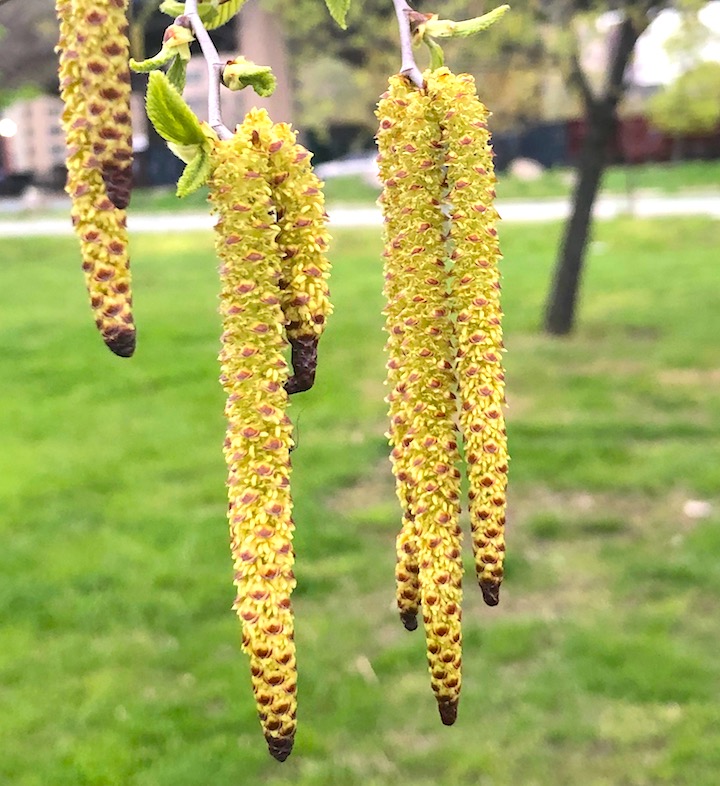
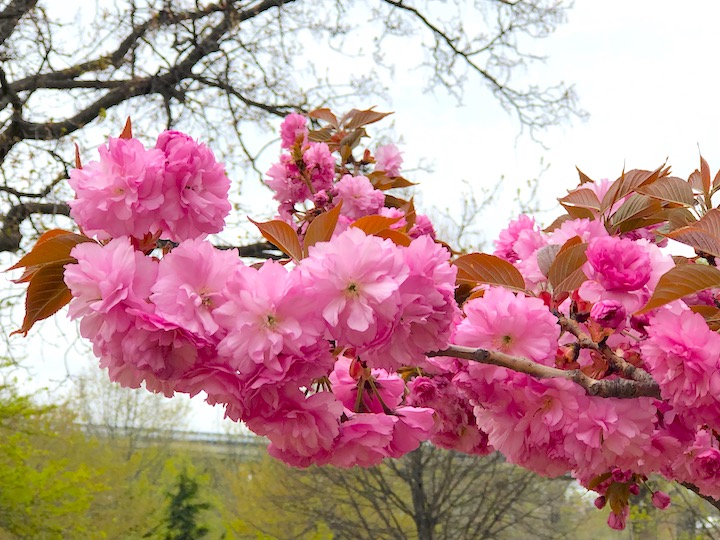
Then, just as I am weary from the endless winter, textured bark and the forms of trees appear more pronounced; buds take on wonderful tints and slowly morph from points and knobs into ruffles, fluffs, tassels and scales. Some burst into pink and white puffs. Amalenchier, Malus, Cherries and Cercis pop out of every corner. Leaves in various shades unfurl, robins are everywhere and another Spring is on the way. Before you know it the ground is carpeted in delicate loveliness. 


A temporary kind of sadness always seeps in at this time. Beauty is fleeting. It is another Spring
and I am another year older. I remind myself that there is no point in wallowing on things I cannot control. I remind myself to roll with the weather, the seasons, with ageing, the changing landscapes, the good and bad of this stampeding world and life, and to cherish it all.

CLEVER CATERPILLARS

Butterflies, like all organisms, are intent on surviving. Some live for only a few days while others live for many months in their adult stage, often surviving harsh winters or perilous journeys to food and breeding grounds. The goal is always the same: to mate, reproduce and continue the survival of the species.

Some butterflies have evolved clever tactics to disguise themselves and avoid predation by birds. The viceroy butterfly has wing venation and color that resembles those of the monarch butterfly, a species that is toxic to birds. Monarch caterpillars ingest chemicals from milkweed plants (Asclepias spp.)  that make the adult butterfly particularly unpalatable and in some cases, toxic. Birds know this. By assuming the color and pattern of the monarch, the viceroy evades predators.  Similarly, the red spotted purple exhibits mimicry as it has evolved to look a lot like the pipevine swallowtail, which is also toxic or unpleasant tasting.  Birds don't take a chance and stay clear of the red-spotted purple, which, I bet is is absolutely delicious.

                                                                                                                                                                                        The orange dog (which is the caterpillar of the giant swallowtail) looks like bird poop. Spicebush swallowtail caterpillars have fake eye markings  that make them look like a snake, a clever strategy to confuse and  intimidate bird predators. 

The relationship between the nymph stage of the ladybug and the swallowtail caterpillar is a source of wonder to me. They both thrive on fennel (Foeniculum vulgare) in my garden. The tiny caterpillars eat the leaves while the ladybug nymphs eat the aphids that suck juices from the plant. Paper wasps prey on swallowtail caterpillars. Great for the plant but not so for the black swallowtail, which is one of my favorite butterfly species. 


Once the plant, with the juicy soft bodies is discovered, wasps hang around for a feast. What is remarkable is the resemblance between the young caterpillars and the ladybug nymphs. I often wonder if the caterpillars have evolved to be mistaken for nymphs. Tricky!  


Newly hatched black swallowtail caterpillars have a white bar around their midsection and stubby projections overall.


As they grow older, the black swallowtail caterpillars look nothing like when they are newly hatched.  Their color changes to a stripped white, black and yellow to greenish coat.


Nevertheless, they are still preyed upon by wasps. I know they must eat too but I am bias and would much rather  have more caterpillars than wasps on my fennel plant. I also welcome the ravenous ladybug nymph. Without it I think there would be many less black swallowtails for us to enjoy.


AFRICAN RICE IN NEW YORK

  While standing in the long line outside The Hungarian Pastry Shop near Columbia University, I was approached by a man who asked if I could...